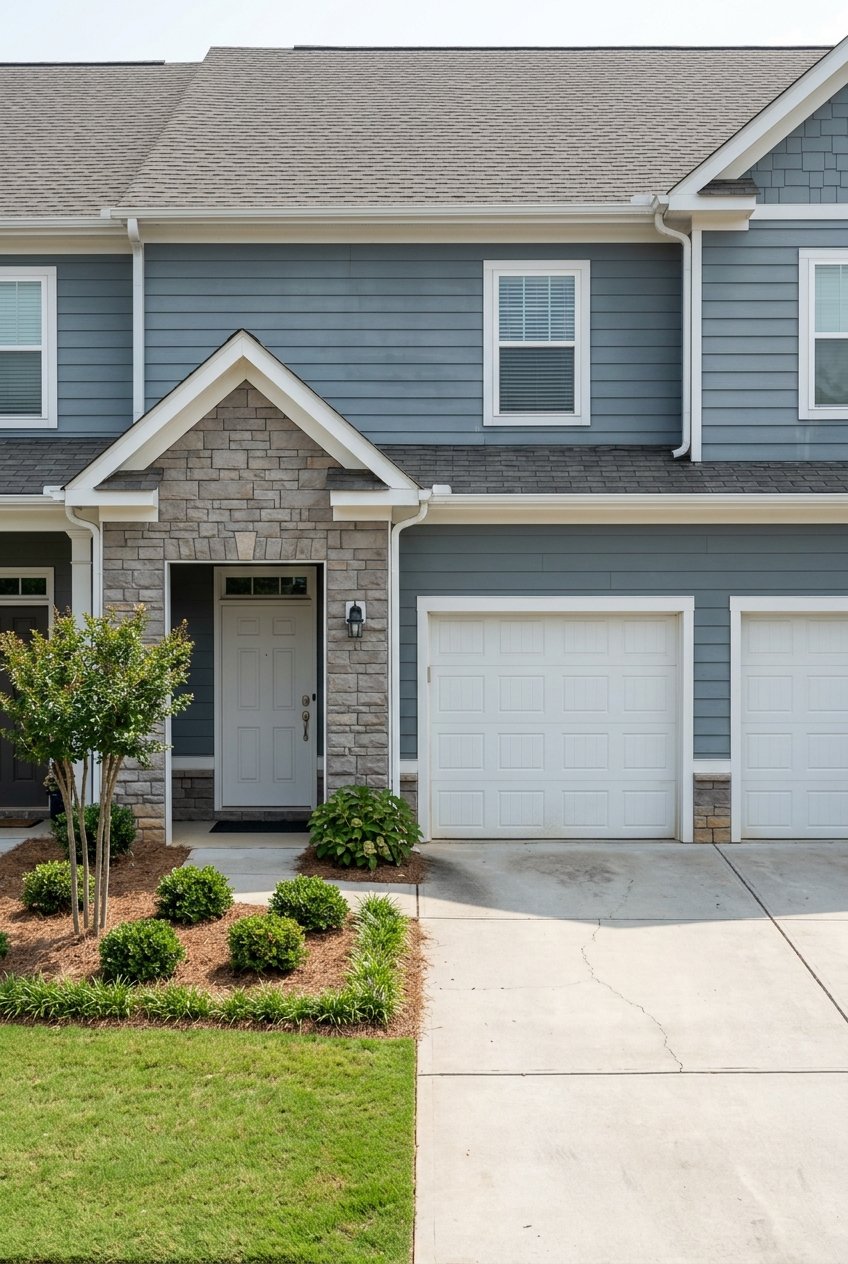
Wondering whether a townhome or a single-family home makes more sense in Greenville? You are not alone. For many buyers, this choice comes down to more than square footage or curb appeal. It affects your monthly budget, maintenance routine, privacy, and day-to-day lifestyle. If you are trying to weigh convenience against space, this guide will help you compare both options in a practical Greenville context. Let’s dive in.
Greenville context matters
In Greenville, home type is only part of the story. Where the home sits in the city or county can shape your experience just as much as whether it is attached or detached.
The City of Greenville is smaller and more urban than Greenville County as a whole. The city’s 2025 population estimate is 74,371, with a 41.1% owner-occupied housing rate and a median owner-occupied home value of $487,500. Greenville County’s 2025 population estimate is 583,125, with a 68.9% owner-occupied rate and a median owner-occupied value of $299,000.
That gap matters when you compare homes. A townhome closer to the urban core may cost more than a detached home farther out, even if the detached home offers more land. In Greenville, density and location often influence value just as much as the home style itself.
What each home type means locally
Greenville County’s zoning ordinance gives a helpful local definition of each housing type. A single-family detached home is a dwelling surrounded by open space or yards.
A single-family attached dwelling includes two or more single-family units joined by a common party wall or similar structure. The county specifically treats townhouses and condominiums as single-family attached dwellings.
In simple terms, a single-family home stands on its own, while a townhome shares at least one wall with another unit. That structural difference shapes privacy, outdoor space, and maintenance expectations.
Why buyers choose townhomes in Greenville
Townhomes often attract buyers who want a simpler ownership experience. In a market where location can carry a premium, a townhome may offer a way to live closer to denser parts of Greenville with less exterior upkeep.
Many townhome communities are also tied to homeowners’ associations. These associations typically manage shared expenses such as landscaping and other common maintenance. That setup can appeal to buyers who want less hands-on yard work and more predictable community maintenance.
Townhomes may be a good fit if you want:
- A lower-maintenance lifestyle
- A location closer to mixed-use or denser parts of Greenville
- Less exterior work to manage on your own
- A home with shared community responsibilities
That said, convenience does not always mean lower cost. HOA dues are usually separate from your mortgage payment, so you will want to look at your total monthly expenses before deciding.
Why buyers choose single-family homes in Greenville
Single-family detached homes usually appeal to buyers who want more control over their space. Because the structure is surrounded by open space or yards, you often get more private exterior area and more separation from neighboring homes.
For many buyers, that means more flexibility in how they use outdoor space and more comfort with the day-to-day feel of the property. It can also mean taking on more maintenance yourself, since detached homes do not automatically come with shared exterior upkeep.
A detached home may be a better fit if you want:
- More yard space
- More privacy from neighboring homes
- Greater control over exterior maintenance
- A less shared style of ownership
This is not a rule for every property, but it is a practical pattern based on Greenville County’s zoning definitions and how attached versus detached housing typically functions.
Maintenance and HOA costs
For many buyers, the biggest real-world difference between a townhome and a single-family home is maintenance. Before you compare list prices, compare what ownership will feel like month after month.
Homeowners’ associations often cover shared costs like landscaping and other maintenance. HOA dues are usually paid separately from the mortgage, and they can range from a few hundred dollars per month to more than $1,000.
In South Carolina, there is not one single comprehensive HOA law that covers everything. Associations generally operate under the South Carolina Homeowners Association Act, other state statutes, and their own recorded governing documents.
That means if you are considering a townhome, you should review not just the dues but also the rules and responsibilities tied to the community. If you are considering a detached home, you should plan for more direct responsibility for lawn care, exterior upkeep, and repair decisions.
Compare the full monthly cost
A lower purchase price does not always mean a lower monthly payment. That is especially important when comparing a townhome with HOA dues to a detached home with higher maintenance needs.
Your full monthly housing cost can include:
- Principal and interest
- Property taxes
- Mortgage insurance, if applicable
- Homeowner’s insurance
- Flood insurance, where applicable
- Utilities
- Maintenance
- HOA fees
In Greenville, the city’s median owner value is notably higher than the county’s overall median. That suggests a centrally located townhome can sometimes cost more than a detached home farther from the city core. The smart move is to compare the total monthly cost, not just the asking price.
Privacy and outdoor space
If privacy is high on your list, a detached home often has the edge. Since it is surrounded by open space or yards, you typically have more separation between your living space and the next home.
With a townhome, shared-wall living is part of the design. You may also have less private outdoor space, depending on the layout and community structure.
Neither option is automatically better. It comes down to how you want to live. If you want less yard to maintain, a townhome may feel efficient and practical. If you want more room outside and more distance from neighbors, a single-family home may feel like the better long-term fit.
Where each option is more common
Greenville’s planning framework gives buyers a useful lens for understanding where attached and detached homes are more likely to appear. The City of Greenville separates land use into house-scale, neighborhood-scale, mixed-use downtown, shopfront mixed-use, community-scale, and overlay districts.
Townhomes and similar attached housing types tend to fit more naturally in mixed-use downtown, shopfront mixed-use, and downtown overlay areas. Detached homes tend to fit better in house-scale and neighborhood-scale districts.
Greenville County’s comprehensive planning also supports a detached-home-heavy pattern along more suburban edges of the market. So if you are shopping near denser parts of Greenville, attached housing may show up more often. If you move farther toward suburban areas, detached homes may be more common.
Resale considerations in Greenville
When you think ahead to resale, home type is only one piece of the puzzle. Monthly carrying cost, HOA rules, and location usually matter just as much.
In South Carolina, sellers must disclose whether a home is governed by an HOA. That makes HOA status part of the conversation from the beginning, not a small detail to sort out later.
In practical terms, townhomes may appeal to buyers who want a lower-maintenance lifestyle and a more central location. Detached homes may appeal to buyers who want more privacy and outdoor space. The stronger resale choice is usually the one that best matches buyer expectations for that location and price point.
Which option fits your lifestyle?
If you are still deciding, start with your daily routine rather than the listing photos. Think about how much exterior upkeep you want, how important privacy is to you, and whether location or yard space matters more.
A townhome may be the right fit if you want convenience, shared maintenance, and access to denser parts of Greenville. A single-family home may make more sense if you want more space around you and more direct control over the property.
There is no one-size-fits-all answer. The best choice is the one that supports your budget, your lifestyle, and your comfort with long-term ownership responsibilities.
If you want help comparing Greenville properties side by side, Dina Napechnik can help you look beyond the listing sheet and focus on what will work best for your goals.
FAQs
What is the difference between a townhome and a single-family home in Greenville?
- In Greenville County zoning terms, a single-family detached home is surrounded by open space or yards, while a townhome is a single-family attached dwelling joined to another unit by a common wall or similar structure.
Are townhomes in Greenville always less expensive than single-family homes?
- No. Because Greenville city values are higher than the county overall, a centrally located townhome can cost more than a detached home farther from the urban core.
Do Greenville townhomes usually have HOA fees?
- Many do. HOA dues are typically separate from the mortgage and may cover shared expenses such as landscaping and other maintenance.
What should buyers compare when choosing between a Greenville townhome and single-family home?
- Compare total monthly cost, maintenance responsibilities, privacy, outdoor space, HOA rules, and how the location fits your daily routine.
Where are townhomes more common in Greenville?
- Based on the city’s planning framework, townhomes and similar attached housing are more likely in mixed-use downtown, shopfront mixed-use, and downtown overlay areas.
What should sellers know about HOA status in Greenville resale?
- In South Carolina, sellers must disclose whether a home is governed by an HOA, so that information is an important part of the resale conversation.